
Is street food in Marrakech safe?
A few simple habits lower the risk, with or without a guide.
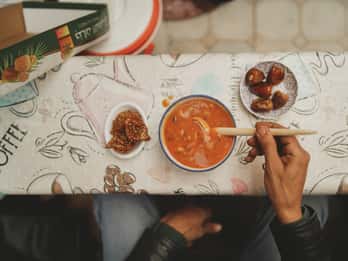
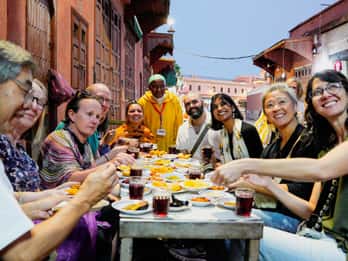
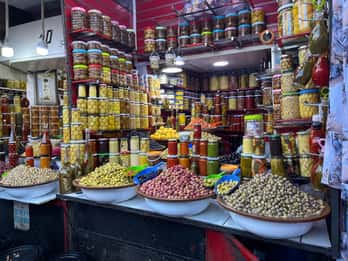
Street food in Marrakech is cooked fresh and fast, often over charcoal, and the busiest stalls turn over their stock all evening. That is in your favour. The risks are the usual ones for a hot city: food that has been sitting, oil that has been used too long, water of unknown origin. A guide helps you avoid them, but no guide can promise a calm stomach.
If hygiene worries you
Bottled water included
The listing puts bottled water on the inclusion list, so you are not tempted by a jug on the counter.
How to judge a stall
- Eat where Moroccan families eat. A stall full of locals is busy for a reason; one with only tourists deserves a second look.
- Look at the frying oil. If it is dark and has clearly been in use for a while, walk on.
- Minced meat such as kefta should be cooked through, not pink in the middle.
- Skip fried fish unless you saw it come fresh to the pan; Marrakech is a long way inland.
- On the square itself, grilled food is the safer pick. Biscuits and pastries are better bought from a pâtisserie than from a cart.
The square has also gained hand-washing stations and water points for the vendors, part of a recent upgrade of the stalls.
What the guide does
On a food tour the guide chooses the stalls and orders dishes that are cooked to order. That filters out most of the risk. It does not remove it: A Chef’s Tour states that cross-contamination at street stalls cannot be ruled out, which matters most for allergies. Tell the guide early if a dish does not agree with you, and skip anything you are unsure about. Diet and allergy rules per tour are on the vegetarian page.
Water, ice and salad
Drink bottled water; some tours include it. Ask for drinks without ice if you are cautious, and go easy on raw salads in the first days. The dish guide explains what each dish on a tour is made of.
If your stomach complains
Rich food, heat and a long walk can upset a stomach even when hygiene is fine. Keep oral rehydration salts in your bag, drink plenty, and rest the next day. See a pharmacy or a doctor if symptoms are strong or do not settle.
Two guests, two experiences
Guests often praise the stops a guide chooses. One reviewer fell ill after a tour; she points to the souks and says it may be a coincidence.
“really great experience - lots of food and knowledge, tried lots of places to eat we probably wouldn’t have visited otherwise”
“It may well be a coincidence, but we’ve all been ill since the food tour, with no symptoms prior. The souks are not the cleanliest place (flies, stray cats, strewn rubbish, overflowing bins etc) so I suppose this was inevitable really. The tour itself was fantastic. Rashid was very knowledgeable, …”
Reviews by guests after their food tour or class, from GetYourGuide.
FAQ
Is it safe to eat street food in Marrakech?
For most visitors, yes, if you choose busy stalls with food cooked in front of you, drink bottled water and skip anything that has been sitting. A guide lowers the risk further but cannot rule out an upset stomach.
Is the food on Jemaa el-Fnaa safe?
Grilled food that is cooked to order is the safer choice on the square. Be careful with fried fish whose freshness you cannot judge and with biscuits sold from carts.
Can I drink tap water in Marrakech?
Visitors usually stick to bottled water. Several food tours include bottled water, and you can buy it everywhere in the medina.
Does a food tour guarantee the food is safe?
No. A good guide picks busy stalls and dishes cooked to order, which lowers the risk. None of the operators promises more than that, and A Chef’s Tour points out the risk of cross-contamination at street stalls.